
Why Does My Ankle Crack When I Rotate It?

If you notice a cracking or popping sound when rotating your ankle, you're not alone. Many people experience this sensation during movement, stretching, or exercise.
In most cases, ankle cracking is completely normal and harmless. However, sometimes it can signal joint instability, tendon movement, or a previous injury.
Understanding why it happens can help you decide whether it's nothing to worry about or something that requires attention.
Is It Normal for Ankles to Crack?
Yes — in many situations, ankle cracking is normal.
Joints throughout the body can produce small popping or cracking sounds during movement. This often happens when:
- You rotate your ankle
- You stretch your foot
- You walk after sitting for a long time
- You exercise or warm up
These sounds are usually painless and harmless.
However, if ankle cracking is accompanied by pain, swelling, or instability, it may indicate an underlying issue.
5 Common Reasons Your Ankle Cracks When You Rotate It
Several different mechanisms can cause ankle cracking. Here are the most common explanations.
1. Gas Bubbles in the Joint Fluid
Your ankle joint contains synovial fluid, which lubricates the joint and allows smooth movement.
When the joint moves or stretches, gas bubbles in this fluid can collapse or shift, producing a cracking sound.
This is similar to the sound that occurs when people crack their knuckles.
In most cases, this type of ankle cracking is harmless and temporary.

2. Tendons Moving Across the Joint
Another common cause of ankle cracking is tendons moving over the bones of the ankle.
When you rotate your ankle, certain tendons may briefly snap over bony structures, creating a clicking or popping sound.
This is especially common if:
- your ankle is tight
- your tendons are inflamed
- you recently increased physical activity
3. Tight Ligaments or Stiff Joints
If the ligaments around the ankle become tight, rotating the ankle can cause them to shift slightly, resulting in a cracking sensation.
This often occurs when:
- you haven't moved your ankle for a while
- your muscles are stiff
- you're warming up before exercise
Once the joint loosens up, the cracking may disappear.
4. Previous Ankle Injuries
People who have had ankle sprains or ligament injuries often notice increased ankle cracking.
Injuries can cause:
- minor joint instability
- scar tissue formation
- altered movement patterns
These changes may make the ankle more prone to popping sounds during rotation.
5. Mild Joint Instability
Some people have naturally looser joints or weakened ankle-supporting muscles.
When the ankle lacks stability, certain structures inside the joint may shift during movement, creating cracking sounds.
Athletes and runners sometimes experience this if the ankle is not properly supported during activity.
When Should You Be Concerned About Ankle Cracking?
Most ankle cracking is harmless, but you should consider seeing a healthcare professional if you experience:
- persistent ankle pain
- swelling around the joint
- difficulty walking
- repeated ankle sprains
- limited range of motion
- instability when standing
These symptoms could indicate conditions such as ligament injuries or a sprained ankle, according to the American Academy of Orthopaedic Surgeons:
- ligament injury
- tendon inflammation
- cartilage damage
- ankle instability
How to Reduce Ankle Cracking
If ankle cracking happens frequently, there are several ways to improve joint stability and reduce the noise.
Improve Ankle Mobility
Gentle ankle rotations and stretches can help improve flexibility and reduce stiffness.
Simple exercises include:
- ankle circles
- calf stretches
- toe raises
- resistance band exercises
Regular mobility work helps keep the joint functioning smoothly.
Strengthen Supporting Muscles
Strong muscles around the ankle help stabilize the joint.
Exercises that help include:
- single-leg balance exercises
- calf raises
- resistance band ankle strengthening
- controlled foot rotations
These movements improve stability and reduce excessive joint movement.
Use Compression or Support
If ankle cracking occurs during physical activity, light compression can provide extra stability.
A cohesive bandage wrap can be useful because it:
- provides gentle compression
- improves joint stability
- allows full range of motion
- sticks only to itself without irritating skin
Many athletes use cohesive bandages for ankle support during workouts or sports.
Quick Self-Test for Ankle Stability
Try standing on one leg for 10 seconds. If your ankle feels unstable, wobbly, or weak, you may benefit from strengthening exercises and light ankle support.
This simple self-check is not a diagnosis, but it can help you notice whether your ankle needs more stability during activity.
How to Wrap Your Ankle with a Cohesive Bandage
Using a cohesive bandage correctly can help support the ankle joint.
-
Start at the midfoot.
Begin wrapping around the arch of the foot to create a stable base. -
Wrap toward the ankle.
Move upward toward the ankle while maintaining gentle tension. -
Overlap each layer.
Overlap each wrap by about 50 percent to create consistent compression. -
Secure the wrap.
Since cohesive bandages stick to themselves, the wrap will hold without clips or adhesive.
This method provides light support while maintaining mobility.
Cohesive Bandage vs Athletic Tape for Ankle Support
Both cohesive bandages and athletic tape are used for ankle support, but they work differently.
| Feature | Cohesive Bandage | Athletic Tape |
|---|---|---|
| Adhesive | Sticks to itself | Sticks to skin |
| Flexibility | Flexible and breathable | More rigid |
| Skin irritation | Very low | Can irritate skin |
| Support level | Light to moderate | Strong restriction |
Athletic tape is better for high-impact sports stabilization, while cohesive bandages work well for compression and everyday support. You can learn more in our full comparison article: Cohesive Tape vs Athletic Tape.
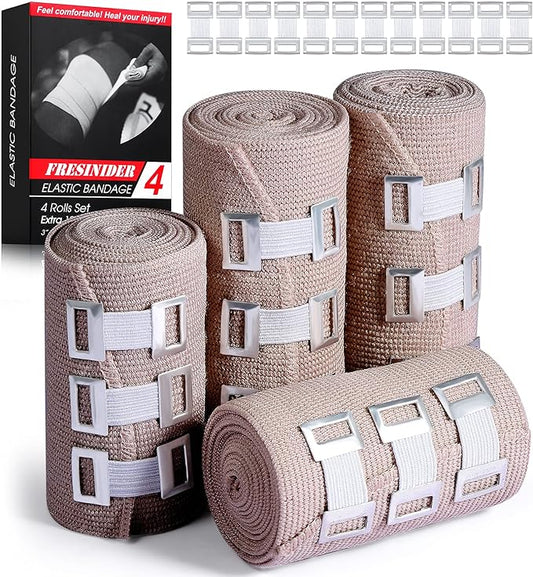
Shop FRESINIDER Cohesive Bandage
Final Thoughts
Hearing your ankle crack when you rotate it is usually nothing to worry about. In many cases, the sound comes from gas bubbles, tendon movement, or normal joint motion.
However, if ankle cracking occurs with pain, swelling, or instability, it may be a sign that your ankle needs additional support or medical evaluation.
Improving mobility, strengthening ankle muscles, and using supportive wraps can help keep your ankles stable and healthy.
FAQ
Why does my ankle pop when I rotate it?
This usually happens because of gas bubbles in joint fluid or tendons moving across the ankle joint.
Is ankle cracking a sign of arthritis?
Occasional painless cracking is typically not related to arthritis. However, persistent pain or swelling should be evaluated by a doctor.
Should I stop rotating my ankle if it cracks?
No. Gentle ankle rotations are usually beneficial for mobility unless they cause pain.
Can ankle compression wraps help?
Yes. Light compression wraps such as cohesive bandages can help stabilize the ankle and reduce excessive movement.
Can weak ankles cause cracking sounds?
Yes. Weak ankle muscles can lead to joint instability, which may increase popping or cracking during movement.