
Primary vs. Secondary Wound Dressings: What Is the Difference?

Wound dressings are often described as either primary or secondary, but these terms do not refer to two fixed lists of products. Instead, they describe where a dressing is placed and what role it performs within the complete dressing system.
A primary wound dressing is placed directly against the wound. A secondary dressing is placed over the primary layer to provide additional absorption, protection, cushioning, or fixation.
Some wounds use two or more separate layers. Others can be covered with a modern all-in-one dressing that combines wound contact, absorption, protection, and fixation in a single product.
Important: Primary and secondary describe the role of each layer—not whether one product is automatically better than another. Dressing selection should consider the wound, drainage level, surrounding skin, body location, product instructions, and professional care plan.
Quick Answer: Primary vs. Secondary Wound Dressings
A primary wound dressing is the layer placed directly against the wound or wound bed. It may protect the surface, maintain an appropriate moisture environment, absorb or transfer fluid, or reduce sticking during dressing changes.
A secondary wound dressing is placed over the primary layer. Its role may include absorbing fluid that passes through the primary dressing, adding cushioning, protecting the dressing system, or holding everything securely in place.
A silicone wound contact layer is a good example of a primary dressing that usually needs an absorbent secondary layer. In contrast, a bordered foam or hydrocolloid dressing may combine several functions in one product, so a separate secondary dressing may not be necessary.

| Feature | Primary dressing | Secondary dressing |
|---|---|---|
| Position | Placed directly against the wound | Placed over the primary layer |
| Main role | Wound contact, protection, moisture management, or a product-specific function | Additional absorption, protection, cushioning, or fixation |
| Must it be absorbent? | No. Some contact layers mainly transfer fluid | Not always, although many secondary layers provide absorption |
| Examples | Contact layer, hydrocolloid, alginate, transparent film, or certain foam dressings | Absorbent pad, foam over a contact layer, gauze, retention material, or compatible film cover |
| Fixation | May be self-adherent or may need separate fixation | May help secure the complete dressing system |
| Always required? | A wound-contact surface is generally part of the system | Not always needed when one product performs the complete dressing role |
Primary and Secondary Dressings Are Roles, Not Fixed Product Categories
The same type of dressing can perform different roles depending on how it is used.
For example:
- A transparent film may be placed directly over a suitable low-drainage wound and function as a primary dressing.
- The same type of transparent film may be placed over another compatible dressing and function as a secondary protective cover.
- A foam dressing may sit directly against the wound and act as the primary absorbent dressing.
- A foam dressing may also be placed over a silicone contact layer and function as an absorbent secondary dressing.
- Gauze may contact the wound directly in one system but serve as an absorbent cover or fixation layer in another.
In its surgical-dressing policy, CMS distinguishes primary dressings as coverings applied directly to a wound and secondary dressings as materials used for additional protection or to secure the primary layer. The policy also notes that products such as transparent film may serve either role, depending on how they are used.
Key point: The role depends on where the product is placed, what function it performs, and how the manufacturer intends it to be used.
Do Not Confuse Dressing Layers With Primary or Secondary Intention
Primary and secondary wound dressings are not the same as healing by primary intention or secondary intention.
The dressing terms describe the position and purpose of products placed over a wound. Healing intention describes how the wound edges close:
- Primary intention generally refers to wound edges that are brought together, such as a closed surgical incision.
- Secondary intention generally refers to an open wound that fills and closes gradually from the wound bed and edges.
A wound healing by either method may still use a primary dressing, a secondary dressing, or an all-in-one dressing system.
What Is a Primary Wound Dressing?
A primary wound dressing is the material placed directly against the wound surface or wound bed.
Depending on its design, it may perform one or more of the following functions:
- Protect the wound surface
- Maintain an appropriate moisture environment
- Absorb wound fluid
- Transfer drainage into another layer
- Reduce adherence to fragile tissue
- Support more comfortable dressing removal
- Provide another product-specific therapeutic or protective function
Silicone Wound Contact Layer
A silicone wound contact layer is a thin, perforated layer placed directly against the wound. Its main purpose is usually to provide a gentler interface between the wound and the absorbent dressing above it.
It may help:
- Reduce sticking to the moist wound surface
- Protect fragile tissue during dressing changes
- Allow wound fluid to pass through its openings
- Keep the absorbent secondary dressing from contacting the wound directly
A contact layer is a primary dressing because it sits directly against the wound. However, it is generally not the main absorbent component.
For a fuller explanation, see how a silicone contact layer protects the wound interface and transfers fluid to an outer dressing.
Hydrocolloid Dressing
A hydrocolloid is commonly placed directly over a suitable wound. It interacts with wound fluid to form a gel and usually includes its own adhesive structure and external backing.
Because it can provide wound contact, fluid handling, external protection, and fixation in one product, a separate secondary absorbent dressing is not routinely added unless the product instructions or care plan call for another layer.
Foam Dressing
Some foam dressings are designed to sit directly against the wound and absorb drainage. A bordered foam may also include a protective outer film and an integrated adhesive perimeter.
A non-bordered foam may also serve as a primary absorbent dressing, but it normally requires an appropriate retention method to remain in place.
Transparent Film Dressing
A sterile transparent film may serve as a primary dressing for an appropriate superficial site with little or no drainage. It provides minimal absorption, so it is not suitable as the only dressing for many draining wounds.
Film may also be used as an external cover over another compatible dressing, making it a secondary layer in that system.
Alginate or Gelling-Fiber Dressing
Alginate and gelling-fiber dressings are often placed directly into or over wounds that produce an appropriate amount of drainage. These materials commonly require a secondary cover to absorb, contain, protect, or secure the primary material.
The suitability of these products depends on the wound and should be determined according to the product instructions and clinical care plan.
A Primary Dressing Does Not Have to Be Highly Absorbent
The word “primary” describes the dressing’s position, not its absorption capacity.
A silicone wound contact layer demonstrates this clearly. It sits closest to the wound, but its open structure is intended to allow exudate to move into an absorbent dressing placed above it.
Manufacturer instructions for one established silicone contact layer state that the product is not absorbent and that wound fluid passes through its perforations into a secondary absorbent pad. They also explain that the outer pad may sometimes be changed without replacing the contact layer. See these manufacturer instructions for combining a contact layer with an absorbent outer dressing.
Primary does not automatically mean absorbent. A primary contact layer may protect the wound interface while allowing drainage to pass into a separate absorbent layer.
What Is a Secondary Wound Dressing?
A secondary wound dressing is placed over the primary dressing to add one or more functions that the wound-contact layer does not provide on its own.
A secondary layer may:
- Absorb fluid passing through the primary dressing
- Help contain wound drainage
- Hold the primary layer in position
- Protect the system from clothing or friction
- Add cushioning
- Provide an external moisture barrier
- Support another professionally prescribed dressing system
Examples of Secondary Dressings or Retention Materials
- Absorbent foam placed over a wound contact layer
- Absorbent wound pad
- Gauze pad or roll gauze
- Dressing retention tape
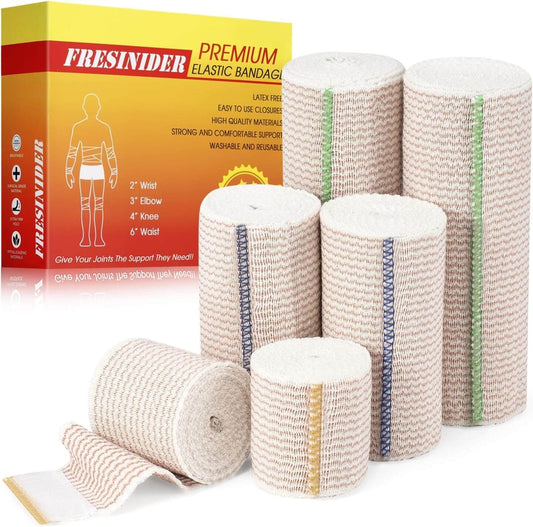
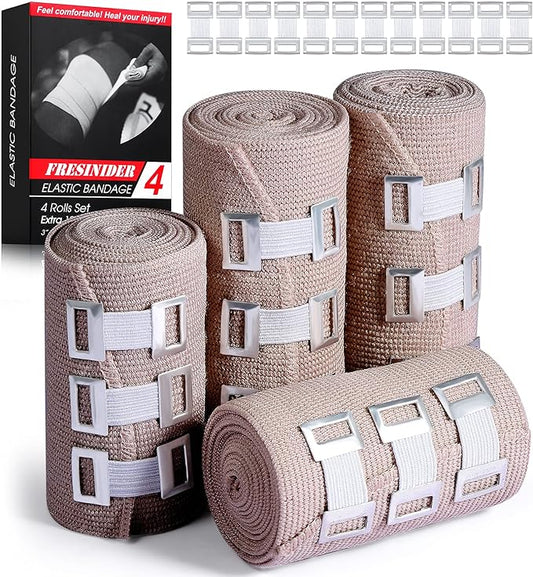
- Tubular retention material
- Stretch netting
- A compatible transparent film cover
- Professionally selected compression materials
Tape, netting, and tubular retention may help secure the dressing system, but they do not automatically replace the wound-contact or absorbent components required by the wound.
Can One Dressing Perform Both Primary and Secondary Functions?
Some modern all-in-one dressings perform functions commonly divided between primary and secondary layers.
Bordered Silicone Foam Dressing
A bordered silicone foam dressing may combine:
- A wound-contact surface
- An absorbent foam core
- A protective outer film
- An adhesive border for fixation
When this design is appropriate for the wound and surrounding skin, a separate absorbent pad or fixation layer may not be needed.
Hydrocolloid Dressing
A hydrocolloid may directly contact the wound, absorb suitable levels of fluid, form a gel, provide an outer barrier, and hold itself in place.
Composite or Island Dressing
A composite dressing may combine a wound-contact surface, an absorbent center, an external backing, and an adhesive perimeter.
The safest way to describe these products is:
Some all-in-one dressings perform functions commonly associated with both primary and secondary layers. Whether another layer is required depends on the individual product instructions and wound-care plan.
When Are Separate Primary and Secondary Dressings Used Together?
Separate layers may be useful when each product has a clearly defined role.
Common reasons include:
- The primary layer reduces adherence but does not provide enough absorption
- The wound produces fluid that must pass into a higher-capacity outer dressing
- The fixation method needs to be selected independently
- The absorbent secondary layer needs to be changed more frequently than the contact layer
- The wound location requires netting or tubular retention
- A specialist care plan uses a compatible compression or retention system
Using separate layers can provide flexibility, but it also makes correct product compatibility, sizing, fixation, and change timing more important.
Common Primary and Secondary Dressing Combinations
| Primary layer | Possible secondary layer or fixation | General purpose |
|---|---|---|
| Silicone wound contact layer | Absorbent foam or wound pad | Reduce sticking while managing drainage in the outer layer |
| Non-adherent wound pad | Additional gauze, absorbent pad, or retention material | Provide wound contact plus added absorption or fixation |
| Alginate or gelling fiber | Compatible absorbent cover dressing | Manage drainage and secure or protect the primary material |
| Non-bordered foam | Retention tape, netting, or tubular retention | Provide absorption with separately selected fixation |
| Bordered foam | Usually no separate fixation when secure | Combine wound contact, absorption, protection, and fixation |
| Transparent film | May be used alone or over a compatible primary layer | Provide direct low-drainage coverage or an external barrier |
| Hydrocolloid | Commonly used without a separate absorbent layer | Combine contact, gel formation, protection, and fixation |
These are general examples rather than universal dressing combinations. Products should only be layered when their instructions, compatibility, and the individual care plan permit it.
What Goes Over a Silicone Wound Contact Layer?
A silicone wound contact layer usually needs an absorbent secondary dressing selected according to the amount and type of wound drainage.
The contact layer protects the wound interface, while its perforations allow fluid to pass into the absorbent layer above it.

| Drainage situation | General secondary-layer consideration |
|---|---|
| Minimal drainage | A light protective or absorbent cover may be sufficient when appropriate |
| Light drainage | A suitable absorbent pad may be considered |
| Moderate drainage | An absorbent foam or another compatible wound pad may be needed |
| Heavy or increasing drainage | Professional reassessment and greater fluid-handling capacity may be required |
The secondary dressing should fully cover the contact layer and remain stable without creating excessive pressure or constriction.
You can review the available FRESINIDER wound contact layer size and its fluid-transfer features when comparing components for a compatible layered dressing system.
Does a Foam Dressing Need a Secondary Dressing?
The answer depends on the foam design and how it is being used.
Bordered Foam
A bordered foam commonly contains a wound-contact layer, absorbent core, outer film, and adhesive perimeter. When it is appropriate for the wound and remains securely positioned, it may function as an all-in-one dressing without a separate absorbent pad or fixation layer.
Non-Bordered Foam
A non-bordered foam may sit directly against the wound or over a contact layer. Because it lacks a complete adhesive perimeter, it usually requires suitable fixation, such as:
- Dressing retention tape
- Tubular retention material
- Stretch netting
- Another compatible retention method
For a more detailed comparison, see how integrated and separately secured foam dressing systems differ.
Can You Put More Than One Dressing on a Wound?
Multiple dressing layers may be appropriate when every layer has a clear and compatible purpose.
For example:
- A contact layer protects the wound interface
- A foam pad absorbs drainage
- A retention material keeps the system in position
However, more layers do not automatically provide more protection.
More layers do not automatically mean better wound care. Each layer should have a clear purpose, remain compatible with the others, and avoid unnecessary pressure, moisture trapping, or bulk.
Layering may be inappropriate when it involves:
- Adding a clean dressing over one that is already saturated or leaking
- Covering leakage with repeated layers of tape
- Placing another absorbent pad over an all-in-one bordered foam without a clear reason
- Creating excess pressure or constriction
- Making the wound difficult to inspect
- Combining products whose instructions do not support layered use
- Using additional layers simply to extend wear time
Do Primary and Secondary Dressings Need to Be Changed Together?
Not always.
Some contact-layer systems are designed so that the primary layer remains over the wound while the absorbent secondary dressing is changed when needed. Other systems are intended to be removed and replaced as one complete unit.
Change timing may depend on:
- The individual product instructions
- The wound and surrounding-skin condition
- The amount of drainage
- Whether the secondary dressing is approaching saturation
- Leakage or contamination
- Loss of adhesion or fixation
- Whether the contact-layer openings remain clear
- The professional care plan
A maximum wear time is not automatically the target for every wound. A dressing may need to be changed sooner if it becomes saturated, loose, contaminated, or unable to manage the wound fluid.
Common Mistakes When Layering Wound Dressings
- Assuming every primary dressing is absorbent. A contact layer may transfer fluid rather than absorb it.
- Using a contact layer without an adequate absorbent cover. This can leave drainage insufficiently managed.
- Adding unnecessary layers over an all-in-one dressing. Additional materials may affect moisture handling, bulk, and inspection.
- Placing fixation tape directly across the open wound. Tape should be used according to its intended fixation role.
- Wrapping retention materials too tightly. Excess tension can create pressure, discomfort, swelling, or circulation concerns.
- Ignoring sterility and packaging status. A sterile product should not be used if its sterile packaging is damaged or already open.
- Covering leakage instead of reassessing the dressing. Repeated leakage may indicate insufficient absorbency, poor sizing, movement, or increased drainage.
- Combining products without checking compatibility. Layering can change adhesion, fluid handling, and removal.
- Choosing only by the total dressing size. The absorbent pad must adequately cover the wound and expected drainage area.
- Making the wound difficult to monitor. The system should allow inspection according to the care plan.
How to Choose a Primary and Secondary Dressing System
The most suitable system is generally the simplest compatible combination that safely provides the wound contact, absorption, protection, and fixation required.
| Question | Why it matters |
|---|---|
| Does the primary layer absorb fluid or mainly transfer it? | Determines whether an absorbent secondary layer is needed |
| How much drainage is present? | Affects absorbency requirements and reassessment frequency |
| Is the surrounding skin intact? | Influences adhesive and fixation choices |
| Does the wound need frequent inspection? | May affect whether layers can be changed or lifted independently |
| Is the area curved or mobile? | Affects stability, fit, and fixation |
| Is the skin fragile or sensitive? | The contact layer, adhesive, retention material, and removal method all matter |
| Can one compatible all-in-one dressing meet the need? | May reduce unnecessary layering and fixation materials |
| Is compression part of the plan? | Requires appropriate assessment, compatible products, and professional guidance |
Clinical dressing-selection guidance emphasizes matching the product to the wound while remaining familiar with the individual indications and instructions for use. See this clinical guidance on choosing dressings according to the wound and product instructions.
For a wider overview of foam, film, hydrocolloid, contact-layer, and other designs, review a broader comparison of common wound dressing categories.
Building a FRESINIDER Primary and Secondary Dressing System
FRESINIDER offers dressing products that can perform different roles within a wound-care system. The correct combination depends on the wound and should follow the current product instructions and care plan.
FRESINIDER Silicone Wound Contact Layer
The FRESINIDER Silicone Wound Contact Layer is designed to sit directly against the wound as a primary contact layer. Its open-mesh structure allows exudate to pass into an absorbent secondary dressing placed above it.
It may be considered when:
- A gentle wound-contact interface is appropriate
- Reducing adherence during dressing changes is important
- An outer absorbent dressing has been selected
- A compatible fixation method is available
FRESINIDER Silicone Foam Dressing With Adhesive Border
FRESINIDER Silicone Foam Dressing with Adhesive Border combines a soft silicone contact surface, an absorbent multilayer core, a protective outer layer, and an adhesive perimeter.
When suitable for the wound, it may provide wound contact, absorption, external protection, and fixation in one product, reducing the need for separate secondary materials.
FRESINIDER Dressing Retention Tape
FRESINIDER Dressing Retention Tape is intended to help hold compatible wound dressings and gauze pads in place. It serves a fixation role and does not replace the wound-contact or absorbent components required by the wound.
Retention tape should be applied to suitable surrounding skin without excessive tension and should not be used merely to cover leakage from an unsuitable or saturated dressing.
Remember: The right dressing system is not necessarily the one with the most layers. It is the simplest compatible combination that safely provides the required wound contact, fluid management, protection, and fixation.
Frequently Asked Questions
What Is the Main Difference Between a Primary and Secondary Wound Dressing?
A primary dressing is placed directly against the wound. A secondary dressing is placed over it to provide additional absorption, protection, cushioning, or fixation.
Does Every Wound Need Both a Primary and Secondary Dressing?
No. Some all-in-one products combine wound contact, absorption, external protection, and fixation. Other wounds require separate layers because the primary dressing does not provide enough absorption or cannot secure itself.
Is Gauze a Primary or Secondary Dressing?
Gauze may serve either role depending on its design, where it is placed, and what function it performs. It may contact the wound directly or be used as an absorbent cover or fixation layer.
Is Foam a Primary or Secondary Dressing?
Foam may be either. It can sit directly against a wound as a primary absorbent dressing or be placed over a silicone contact layer as an absorbent secondary dressing.
Does a Silicone Contact Layer Need a Secondary Dressing?
For a draining wound, it usually requires an absorbent secondary dressing. The contact layer protects the wound interface and allows fluid to pass into the absorbent layer above it.
Can Transparent Film Be Used as a Secondary Dressing?
Yes, when the product instructions allow it and the film is compatible with the primary dressing. It may provide an external protective barrier, but it offers little absorption.
Is Medical Tape a Secondary Dressing?
Medical tape commonly provides fixation within a secondary dressing system. It does not by itself replace the wound-contact and absorbent functions needed for many wounds.
Can a Bordered Foam Dressing Be Used Alone?
When the dressing is suitable for the wound and used according to its instructions, a bordered foam may function as an all-in-one dressing without a separate absorbent or fixation layer.
Can Primary and Secondary Dressings Be Changed at Different Times?
Some systems allow the absorbent secondary layer to be changed while the contact layer remains in place. Other systems are intended to be replaced as a complete unit. Follow the specific product instructions and care plan.
Can Two Absorbent Dressings Be Layered?
Only when there is a clear care reason and the products are compatible. Adding layers solely to extend wear time or cover leakage may trap moisture, add bulk, create pressure, and delay reassessment.
When to Contact a Healthcare Professional
Seek professional advice when:
- The wound is deep, surgical, diabetic, chronic, or difficult to identify
- The wound becomes larger or deeper
- Drainage increases unexpectedly
- Dressings repeatedly become saturated or leak
- The surrounding skin becomes white, soft, broken, or increasingly irritated
- Redness, warmth, swelling, or pain increases
- Drainage becomes thick, cloudy, green, or foul-smelling
- Fever, chills, fatigue, or general illness develops
- Compression therapy is being considered
- You are unsure whether the selected dressing layers are compatible
Final Thoughts
Primary and secondary wound dressings are distinguished by their role within a dressing system.
The primary layer sits directly against the wound. It may protect the wound surface, absorb or transfer drainage, maintain moisture balance, or reduce adherence. The secondary layer sits above it and may provide added absorption, protection, cushioning, or fixation.
Not every wound needs two separate products. Bordered foam, hydrocolloid, and some composite dressings may combine several functions in one design. Other systems, such as a silicone wound contact layer covered by an absorbent foam or pad, deliberately separate wound contact from fluid management.
The safest approach is to select the simplest compatible system that meets the wound’s actual needs. Consider:
- The wound type and depth
- The amount of drainage
- The surrounding skin
- The need for gentle wound contact
- The required absorption
- The body location
- The fixation method
- The need for inspection
- The product instructions
- The professional care plan
Primary and secondary describe what each layer does—not a fixed list of products and not a reason to add unnecessary layers.
About the Author
FRESINIDER Editorial Team
The FRESINIDER Editorial Team creates educational content about wound dressings, bandages, skin protection, and everyday wound care. Our articles are developed using reputable clinical guidance, relevant medical sources, and product information to help readers better understand general wound care options.
Medical Disclaimer
This article is intended for general educational purposes only and does not constitute medical advice, diagnosis, or treatment. Dressing selection and layering depend on the wound, drainage, surrounding skin, underlying health, product compatibility, and individual care plan. Follow the current product instructions and consult a qualified healthcare professional for surgical, diabetic, chronic, deep, infected, worsening, or difficult-to-identify wounds.